Blog

Author: eastpointelectric

Electrical Services
eastpointelectric

Former employees sue United Electrical Contractors for 'obscenely … – Detroit News

Detroit — Six former employees of an electrical contracting company in Michigan filed a federal lawsuit Thursday against their former employer, alleging “obscenely racist behaviors and practices.” Managers and employees at United Electrical Contractors are accused of using racial slurs on a near-daily basis and discriminating against Black and Hispanic workers in the complaint filed at the U.S. District Court for the Eastern District of Michigan.Plaintiffs, who refer to themselves as the “United Six,” say White employees were regularly given preferential treatment and provided better training opportunities, and workers of color were routinely harassed by management who ignored instances of abuse from other workers at all levels. “I heard White employees use the N-word so often it became a part of the air,” said Marius Richardson of Bath, one of the six plaintiffs.“At one point, a White coworker told me to hurry up or he would ‘pull out [his] whip,’” added Richardson, who worked for UEC as an apprentice electrician during 2020. United Electrical Contractors President Scott Flegler called the allegations in the complaint “unfounded” and argued that the lawsuit is “part of an ongoing harassment campaign by a union, designed to interfere with our company’s operations and relationships.”“These claims had never previously been brought forward to anyone at our company. We take any claims of discrimination extremely seriously and have a track record of doing so,” Flegler said in a Thursday statement. “When these same plaintiffs filed allegations against us with the Equal Employment Opportunity Commission last year, we conducted a thorough, independent review, revealing nothing to substantiate those claims,” said Flegler, noting the EEOC hasn’t yet completed its review but despite that, the union has publicly released the new allegations. “This further establishes that the actual goal of today’s announcement was to harass and cause harm to our company,” he said. The lawsuit was brought by Richardson, Eric Burch of Traverse City, Vance Murray of Southfield and Tyler Richardson of Lansing, who are all Black, as well as Gabriel Tavera of Jackson, who is Hispanic, and Jordan Shank of Atlanta, who is White.The six were employed at UEC, which has offices in Lansing and Livonia, for different periods and filled various positions between 2015 and 2021. Most, like Richardson, were apprentice electricians, but Murray became a foreman in 2017, according to the suit. The lawsuit alleges that the five Black and Hispanic plaintiffs faced racial harassment, discrimination and retaliation in violation of their civil rights.“In today’s civil rights litigation, you hear a lot about racism in the workplace,” the plaintiffs’ attorney Richard Mack of Miller Cohen said at a Thursday morning press conference outside the Theodore Levin United States Courthouse in downtown Detroit. “But it’s rare that you hear so much (about) where supervisors, management are not only allowing it but participating in it themselves.”Burch claims that a foreman called him “a boy on a slave ship” who should “go back to (his) plantation,” while Tavera claims he was repeatedly referred to as “Brown Boy” and asked if he was “Mexican or (an N-word)”.Murray said he was not given a company credit card while he worked as a foreman, despite White counterparts receiving them and, he claimed, using them inappropriately. When Shank, the only White plaintiff in the lawsuit, heard employees and managers racially abuse fellow workers, he said he stood up “against the rampant racism,” which was met with retaliation by UEC, which allegedly forced him to dig trenches by hand while other employees were able to use a backhoe. Shank also alleges the company discriminated against him on the basis of his disability by demoting him following a work-related injury to his back and abdomen in 2019.Tavera said that foremen at the company would question his national origin, call him slurs and ask if jumping off a ladder reminded him of jumping over the border wall. He, along with Marius Richardson and Tyler Richardson, was laid off during the COVID-19 pandemic due to what they were told was lack of work, according to the complaint, which claims White employees with less seniority were not laid off.The plaintiffs are seeking damages for economic injury and extreme mental and emotional distress, among others. Asked about the sum of damages sought in the complaint, Mack said they were after “anything and everything that the law allows.” The plaintiffs also are demanding mandatory diversity and inclusion training of supervisory personnel and employeesas well as a complaint process for harassment. Flegler said Thursday that the company is proud of its diverse and talented workforce.“Diversity is one of our core values and key differentiators of our company, which is why our employees receive diversity training,” he noted. The Rev. Charles Williams, president of the Michigan chapter of National Action Network, said the alleged behavior at UEC was unacceptable, as was continuing to give it contracts with major development companies and the city of Detroit. “The National Action Network stands against racism in the workplace,” Williams said. “ We support the legal action of these six workers, and the workers who remain under the Jim Crow thumb of this company.” The Michigan chapter of the Associated Builders & Contractors trade association which represents the non-union construction industry, released a statement Thursday calling the suit “bogus” and saying it was based on “false claims” made by union members. “The exemplary character of the men and women of United Electrical simply want to win work in a fair and ethical manner and that is what they did. Any actions taken against a company based on false allegations becomes a test for how we respond to it,” said ABC chapter president President Jimmy Greene. “I hope that any General Contractor’s response is to continue to honor the contract award to a company that won it ethically and with an outstanding record of providing great work safety, timely and with excellent quality.”halbarghouthi@detroitnews.com@HaniBarghouthi source
Electrical Services
eastpointelectric

How to Wire an Instagram-Worthy Electrical Subpanel – Fine Homebuilding

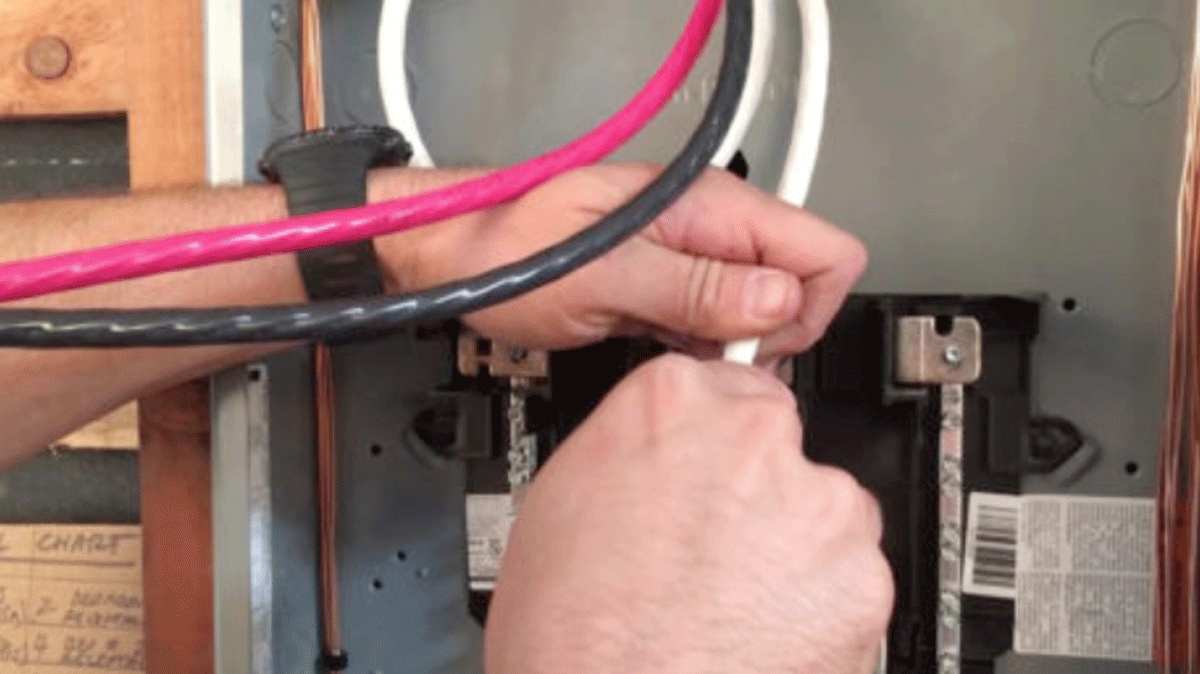
California electrician CJ Nielsen’s electrical work could probably be featured in an art museum—not with the abstract expressionists, but wherever it is that they keep the ideal representations of real-world objects (next to, I imagine, a Maloof chair).But for the time being, he’s still a working electrician, wiring up things that few people will ever see or appreciate. In his mind, that’s no excuse for doing a sloppy job.In this video, CJ demonstrates how to wire up a subpanel that looks so good, you won’t want to put a cover on it (though, if the inspector checks in, you’ll have to). The process is detailed in his article, “Shipshape Subpanel Install,” in FHB #276.When installing electrical panels, it pays to do a neat job, if for no other reason than it makes it easier to find and fix problems in the future. It doesn’t hurt for getting referrals, either.Start by numbering each cable as you pull it to the box, and make sure they hang on the side of the box they’ll enter (most panels have odd-numbered breaker spaces on the left, even numbers on the right). Pull enough cable for each circuit so that it reaches below the bottom of the panel by about half the height of the box. This extra wire will give you flexibility to make minor changes to the breaker layout.Once the cables are pulled to the panel, remove the box knockouts. Tap them down with needle-nose pliers and pull them out from the bottom.Then install box connectors to secure the cables to the box and protect them from the sharp edges of the knockouts. Feed the cables into the box two at a time, working out any kinks. The feed cable in particular has a “memory,” or a desire to return to its original shape, which will put strain on the box and connections if it’s not worked out before it’s connected to the panel.CJ uses plastic cable stackers to keep the circuit cables neatly in the stud bay and in line with the connectors. After running each pair of wires into the box, secure them in the stacker. Here it’s mounted to a piece of 2×4 blocking to keep it centered in the wall.To make it easier to keep track of everything, tack a couple screws or nails into the studs on either side of the box to hold the wires out of the way. Always work one side of the box at a time to help keep everything in order.Once all the wires are in the box, use a utility knife with a fresh blade to carefully slice the outer plastic sheathing on the circuit cables. Start the cut about an inch down from the box connectors. Keep tension on the cable as you slice, and stop the cut just above the label on the sheathing. Clip off the label and set it aside, then peel off the sheathing and paper, and use diagonal cutters to cleanly cut this waste material from the wires.Next, separate the uninsulated ground from the other wires. Take the label you just snipped off and slip it on the neutral and hot wires, and bend the wires’ ends over to hold the label in place. Repeat the process for all of the circuit cables.Next, hook up the ground wires. Start by separating all of the paired neutrals and hots from the loose grounds. Take your time to untangle everything so that the grounds can be neatly pushed into the back corners of the box.Most panels come with one ground bus bar. To keep things neat, CJ installs a second ground bus—one on each side of the box—so the grounds don’t have to cross from one side to another.Going one wire at a time, use a finger to push the grounds into the back corner, and run your finger down the wire to straighten it out.Hold your finger on the wire across from the bus bar location where you’re going to attach it, make a soft 90° bend, and cut the wire to length. About 1/8 in. of copper should stick through the other side of the bus. Leave the bottom-most space on each ground bus bar open for a jumper.When done landing the grounds on one side, zip-tie them together so they stay neatly in the back of the box. Land the ground wire for the subfeed before zip-tying the grounds on the other side.To strip the subfeed, lightly score a line starting about an inch below the connector and down to the end of the cable. At the end, you can cut all the way through since the ends will be trimmed off. Starting from the bottom, simply pull the sheathing away from the cables, and it should split right on the scored line. Use diagonal cutters to trim the sheathing away at the top.Install a plastic insulating bushing onto the connector holding the feed cables, then separate out the feed’s ground wire, bend it to the right side of the box and down to the bus bar, and connect it to the ground bus bar the same as the other grounds, and zip tie them all together.Before moving on, CJ connects the ground bus bars together with the cutoff from the subfeed’s ground wire. This connection isn’t required, since the ground buses are connected to the box, but it guarantees the grounds are tied together.It’s always a good idea to leave some extra feed cable in the box to make future repairs easier. Electricians call this excess “service loops.” Take time to make the service loops neat and work out the cables’ memory so that they go into the lugs easily. Cables that are forced into the lugs are more likely to loosen over time, which could result in a fire.Start with the neutral, looping it so that its end will fall squarely in the lug. Line the cable up with the lug to determine where to trim it, then cut at that mark with

Electrical Services
eastpointelectric

804 Experts – Hale's Electrical Service – Home Generators – WRIC ABC 8News

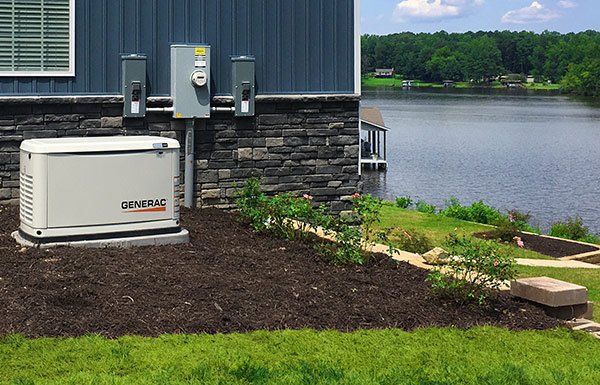
WRIC ABC 8NewsPlease enter a search term.Please enter a search term.Virginia’s ONLY Generac PowerPRO Premier Team takes your power needs and turns them into your reality. We make it all about you and your needs! Control your power with a Generac Home Standby Generator and never feel powerless again with the Hale YES Team!Hale’s Electrical Service23194 Airport StN. Dinwiddie, VA 23803Phone: (804) 518-3060Hale’s Electrical Service has focused on Generac Generator sales, service and installation since David and Tanya opened Hale’s Electrical Service in 2003. Fifteen years of Generac installations and over 4,000 generators being serviced, Hale’s is Virginia’s only Generac PowerPRO Premier Leader. From homeowners to business owners, Hale’s has what you need to take CONTROL of YOUR Power!An automatic backup generator is a backup electrical system that operates whether you are home or away. Within seconds of a power outage, it automatically supplies power directly to your home’s electrical circuit breaker box. After utility power returns, the generator shuts itself off and waits for the next outage. It operates on natural gas or liquid propane gas and sits outside just like a central air conditioning unit. See the video below for more information.Our courteous and knowledgeable staff will walk you through your installation process and keep you updated each step of the way. We lay out the dates and times that our installation professionals will be at your home, what you should expect, and we verify your needs during the installation process. We endeavor to make your installation as comfortable and convenient as possible, knowing you have unique needs and expectations!As a Generac PowerPRO Premier Dealer, we have a full team of certified / trained technicians on staff, available 24/7/365. We are proud to offer traditional Generac recommended service, as well as annual service options. The majority of our customers follow the Generac recommended service for their Generac Generator for added reliability and peace of mind.Your power has been our ONLY business since 2003! We invite you to take a scroll through our recent Generac Home Standby Generator installations link below and imagine what a Generac Automatic Standby Generator will look like at your home! We update this page regularly so be sure to check back often to see our most recent installations!Taking your power needs and dreams and turning them into reality! Our team will help you control your power, control your life and give you the power YOU control! Don’t take our word for it – see what our customers have to say about us.We understand that investing in a generator is a big decision and want to make sure you are fully aware of the features and capabilities of your generator. That’s why we at Hale’s Electrical Service are dedicated to making sure our customers are educated about the Generac they plan on buying. Here are some of our top frequently asked questions.Whether you prefer to call, email, ask us on social media, or stop by our office; our knowledgeable Generac PowerPRO Premier Professionals are ready to assist you when you need it. source

Electrical Services
eastpointelectric

Electrical Trades — CNM – CNM

Spring Session II Starts Jan. 30The Electrical Trades program teaches electrical circuitry, troubleshooting, local and national electrical codes, and OSHA compliance safety training. Earn an Associate of Applied Science or certificate and pursue work as a Solar Photovoltaic Installer, Electrician, and more. Loading… Note: Some jobs require education or training beyond the CNM degree/certificate. First TermHands-on training for personal and tool safety, meter reading, electrical circuitry, electrical formulas, electrical calculations, material identification and AC/DC motor operation and troubleshooting.Second TermResidential blueprint reading, application of the National Electrical Code (NEC), NM Electrical Code (NMEC) and local electrical codes, installation of branch circuits and feeders, residential services, single pole, three and four-way switch circuits, door chime installation, dryer, range and swamp cooler circuitry and conduit bending.Third TermTechnical skills, power distribution systems, 3-phase services, hazardous locations, commercial blueprint reading, circuitry, 3-phase motor starters, timers, mechanical and hydraulic conduit bending, power threaders, cutting and threading of rigid metal conduit, knock-out punches, hammer-drill operation, powder actuated fasteners, cable installation, wire pulling and application of the NEC.Get On-the-Job ExperienceElectric Line Worker Pre-Apprentice ProgramCNM Ingenuity offers a 15-week training course including classroom time, fieldwork in the outdoor lab and an internship. For more information visit CNM Ingenuity Electric Line Worker Program.Photovoltaic (Solar) EnergyCNM Ingenuity’s fast-track solar classes deliver the knowledge and skills needed to begin or advance your solar career. They’re also excellent for electricians who find themselves interfacing with solar technology more and more often. For more information visit CNM Ingenuity Photovoltaic (Solar) Energy program.Long-Term Success With Short-Term CommitmentThis program is designed to be completed in 57 weeks, and will cost approximately $8,129 if completed within the usual time. There may be additional costs for living expenses. These costs were accurate at the time of posting (June 2019), but may have changed.New Mexico does not have licensure requirements for this profession.Tools You Will NeedContact Skilled Trades & Arts to receive a course tool list. Launch TC Electrical Lab Get Started at CNM TodayPhone: (505) 224-3000Email: contactcenter@cnm.eduVideo ChatMonday – Thursday, 7 a.m. – 7 p.m.Friday, 7 a.m. – 5 p.m. source

Electrical Services
eastpointelectric

Analysis challenges U.S. Postal Service electric vehicle … – Science Daily

The Inflation Reduction Act signed into law by President Biden this month contains $3 billion to help the U.S. Postal Service decarbonize its mail-delivery fleet and shift to electric vehicles.On the heels of the Aug. 16 bill-signing ceremony at the White House, a new University of Michigan study finds that making the switch to all-electric mail-delivery vehicles would lead to far greater reductions in greenhouse gas emissions than previously estimated by the USPS.In its analysis of the potential environmental impacts of the Next Generation Delivery Vehicle program, the Postal Service underestimated the expected greenhouse gas emissions from gasoline-powered vehicles and overestimated the emissions tied to battery-electric vehicles, according to U-M researchers.“Our paper highlights the fact that the USPS analysis is significantly flawed, which led them to dramatically underestimate the benefits of BEVs, which could have impacted their decision-making process,” said Maxwell Woody, lead author of the new study, published online Aug. 26 in the peer-reviewed journal Environmental Science & Technology.The NGDV program calls for the purchase of up to 165,000 new mail delivery trucks over the next decade. The Postal Service said in February that at least 10% of the new mail trucks would be electric. But following blistering criticism from many quarters, the agency upped that number in July.Though the Postal Service now says at least 40% of the new delivery vehicles will be electric, the flaws in the USPS environmental analysis remain and need to be addressed, said Woody, a research area specialist at the Center for Sustainable Systems, which is part of the U-M School for Environment and Sustainability. The new study takes a second look at the two delivery-vehicle scenarios the Postal Service evaluated in its 340-page Final Environmental Impact Statement on the NGDV project, published Jan. 7.That document compared the expected environmental impacts of a delivery fleet with 10% battery-electric vehicles and 90% gasoline-powered trucks (called the ICEV scenario for internal-combustion engine vehicles) to a fleet with 100% battery-electric vehicles (called the BEV scenario).U-M researchers conducted a cradle-to-grave greenhouse-gas emissions assessment — known as a life-cycle assessment, or LCA — of the two scenarios and reached some vastly different conclusions than the Postal Service did.The U-M team determined that:The Postal Service declined to comment on the U-M study. In February, the agency announced it had completed the environmental review for its Next Generation Delivery Vehicle program and was moving ahead with plans to start purchasing the new trucks. At least 10% of the delivery vehicles would be zero-emissions electric models, while the remainder would be powered by gasoline.In response, attorneys general from 16 states (including Michigan), the District of Columbia and several environmental groups sued the mail agency to block the original purchase plan or to force the Postal Service to buy more electric trucks. The agency later pledged to electrify at least 40% of its new delivery fleet.The authors of the new study say the main reasons their findings differ substantially from the USPS results are:“While our emissions results and USPS emissions values are on the same order of magnitude, the details of the USPS FEIS seem to have significant miscalculations and vary greatly from the established literature on vehicle LCAs,” the study’s authors wrote.Study senior author Greg Keoleian said the new findings suggest the Postal Service should be deploying electric delivery trucks at a rate much higher than 40%. The failure to do so exposes a lack of sustainability leadership by the agency, he said.Many of the largest private fleet operators — including FedEx, UPS, Amazon and Walmart — have begun electrifying their fleets and have more ambitious electrification and decarbonization targets than the current USPS purchase plan, he said.“Each gas vehicle purchased locks in infrastructure for at least 20 years, which will cause the federal government to fall behind private vehicle fleets and will drive future greenhouse gas emissions that could be dramatically reduced by greater electric delivery vehicle deployment,” said Keoleian, director of the U-M Center for Sustainable Systems.Ultimately, the USPS decision about next-generation delivery vehicles was based more on cost than climate-altering greenhouse gas emissions, he said. The agency estimated that an all-electric delivery fleet would have a total cost of ownership about $3.3 billion higher than a fleet with just 10% electric vehicles.However, the recently signed U.S. Inflation Reduction Act includes $3 billion to help the U.S. Postal Service meet zero-emission vehicle goals: $1.29 billion for the purchase of zero-emission delivery vehicles and $1.71 billion for infrastructure to support those vehicles.The additional funds will likely reduce cost-based objections to a fully electric postal delivery fleet.On top of that, the authors of the new study say the mail agency’s estimate of a $3.3 billion cost savings for the ICEV scenario failed to account for the climate and public health damages associated with continued use of fossil fuel-powered vehicles.“Given the long lifetimes expected of these vehicles, committing to such a course contradicts U.S. climate policy and environmental justice goals, squanders an opportunity to deploy BEVs in an ideal use case, exposes a lack of sustainability leadership, and jeopardizes our ability to meet national and international climate targets,” the study authors wrote.In addition to Woody and Keoleian, the authors of the Environmental Science & Technology paper are Parth Vaishnav and Michael Craig of the Center for Sustainable Systems at the U-M School for Environment and Sustainability.The work was supported by Ford Motor Co. through a Ford-University of Michigan Alliance Project Award, by the Responsible Battery Coalition and by the U-M School for Environment and Sustainability.Story Source:Materials provided by University of Michigan. Note: Content may be edited for style and length.Journal Reference:Cite This Page:Get the latest science news in your RSS reader with ScienceDaily’s hourly updated newsfeeds, covering hundreds of topics:Keep up to date with the latest news from ScienceDaily via social networks:Tell us what you think of ScienceDaily — we welcome both positive and negative comments. Have any problems using the site? Questions? source

Electrical Services
eastpointelectric

Electric bills could increase 64% this winter in Massachusetts, National Grid warns – WCVB Boston

Natural gas heating customers could see 22-24% price hike Natural gas heating customers could see 22-24% price hike The latest breaking updates, delivered straight to your email inbox.Natural gas heating customers could see 22-24% price hike Massachusetts electricity customers could be facing a steep increase in their winter bills, National Grid warned on Wednesday. Citing the high price of natural gas used in generating the power, the utility company said winter electricity rates taking effect on Nov. 1, will be sharply higher than they were last winter. “In total, the monthly bill of a typical residential electric customer using 600 kWh (kilowatt-hours) will increase from $179 in the winter 2021-2022 season, to approximately $293 for the winter 2022-2023 season,” National Grid said. That’s a 64% increase year-over-year. National Grid says most of the increase is driven by electric supply rates and that the company has “worked to keep the delivery portion of the bill essentially flat.”Eversource, the state’s other major electric utility, said it plans to file proposed rate changes with the Department of Public Utilities around mid-November, for changes to take effect on Jan. 1. Last winter, the Eversource proposed increase was about 25%. Rates are also seasonally adjusted for natural gas and National Grid said the average Boston Gas residential heating bill will increase $50 or 22% and the average Colonial Gas residential heating customer will see an increase of $47 or 24%, compared to rates last year. “With energy costs rising due to global conflict, inflationary pressures, and high demand as the winter heating season approaches, National Grid understands the impact this increased financial burden can have on our customers and communities, especially when we are all experiencing increased costs for other goods and services,” the company wrote in a statement. “National Grid buys energy on behalf of our customers from the wholesale market and passes through those costs without any markup or profit, so customers pay what National Grid pays for that energy.” Eversource said its proposed natural gas rates, scheduled to take effect on Nov. 1, would increase prices by about 38% or $86 for customers in the former NSTAR Gas service area and 25% or $61 for those in the former Columbia Gas territory. “These increases are mainly driven by the current high supply cost of natural gas worldwide,” Eversource said. To help customers, National Grid announced a “Winter Customer Savings Initiative” that highlights energy-saving tips and payment assistance programs. Eversource also shared its link to energy efficiency programs. Massachusetts also offers the Low Income Home Energy Assistance Program, which helps eligible households pay a portion of their winter bills. Hearst Television participates in various affiliate marketing programs, which means we may get paid commissions on editorially chosen products purchased through our links to retailer sites. source

Electrical Services
eastpointelectric

$30K or $2,500? Ohio family fights bill for electric service to new home – Springfield News Sun

A Columbus couple appealed to state regulators to have their newly built Marysville home withdrawn from AES Ohio electric service territory after agreeing to pay AES Ohio nearly $30,000 to extend electric service to their new home — a service the couple says another company can perform for just $2,500.A Public Utilities Commission of Ohio (PUCO) settlement conference on the matter between the couple and AES Ohio is scheduled for Thursday.According to a formal complaint to the PUCO by Michael and Rachel Hart, they face an AES Ohio bill of nearly $30,000 for work to extend service to their new home on state Route 736 just south of Marysville, northwest of Columbus.The proposed construction would involve three utility poles, a riser, underground and overhead cables, as well as a transformer, according to a Feb. 23 Dayton Power & Light invoice the couple offered to the PUCO as part of their complaint. (Dayton Power & Light rebranded to AES Ohio last year.)The utility’s total quote for service came to $29,569.54, while a rural electric service company says it can do the job for $2,500, according to the couple’s explanation of their situation. “I am filing this complaint to communicate an unreasonable practice of AES Ohio,” wrote Rachel Hart in her complaint to the PUCO. “My home is on the border of (service) territories of Union Rural Electric and AES Ohio. The home is within the territory of AES. I received a quote of electric service of nearly $30,000.“URE (Union Rural Electric) quoted me $2,500 for service if I was released from AES Ohio territory,” she added. “AES Ohio is refusing to release me from their territory.”She added: “It is unreasonable for me to pay ten times more for electric service when my home is on the border of the territory.”In a filed answer to the couple’s complaint, AES Ohio told the PUCO that Hart requested the construction of an electric line extension to supply service to a single-family residence to be located at or near 12132 State Route 736.An invoice attached to the Harts’ complaint puts the cost of the project at just over $29,569. But in its response to the complaint, the utility said the Harts agreed to pay $30,925.78 for the service extension.“This dispute concerns a line extension project requested by a customer,” AES Ohio spokeswoman Mary Ann Kabel told the Dayton Daily News. “AES Ohio proactively asked the PUCO to schedule a mediation between the company and the customer to explore solutions to resolve the dispute.”Asked about the difference between the two quoted prices, Kabel said: “AES Ohio is committed to exploring potential solutions for this customer, and is following the PUCO’s process for doing so.”“At all pertinent times, AES Ohio has complied with all relevant statutes, regulations, orders, and approved tariffs,” the utility told the PUCO in its filing answering the complaint.AES attorney Christopher Hollon asked PUCO to dismiss the complaint, arguing that AES Ohio has “exclusive right” to furnish electric service to the new home’s location.In an interview, Rachel Hart acknowledged that she signed a contract with AES Ohio for the service infrastructure because she wanted to ensure her family’s new home had electric service by the time her family moved in by the end of September.The Harts are building the home. She said she learned of the cost of the proposed work in February this year. She appealed to the PUCO with a formal complaint in June. She said she signed the contract with AES Ohio in July.Hart asked how one company can quote a job at nearly $30,000 while another offers the same service at $2,500.“I had spent five months fighting it, had gotten nowhere and was back where I started,” Hart said. “Legally, no one was obligated to do anything for me, and I’m still going to continue fighting it.“But the choice was between having power in my home and not having power in my home,” Hart added.She said she did not know how long construction might take, another reason to sign the contract, as she described the choices before her.“I don’t live a mile off the road,” Hart said. “Why are they able to charge me that much money?”A spokeswoman for the PUCO said the cost of extending electric service in rural areas depends on factors such as a home’s distance from roads, underground and above-ground infrastructure requirements, existing lines and more.“It hard to say whether an estimate like that is usual or unusual,” said the spokeswoman, Brittany Waugaman.The amount tied to the work surprised at least one observer.“That is very unusual,” said Billie Duncan-Hart, the 2022 president of the Dayton Realtors trade organization of real estate brokers. “I have not seen that in my 30 years in the business.” About the Author Thomas Gnau is a business reporter who joined the Dayton Daily News in 2007. He has reported for daily newspapers in Ohio since 1991. source

Electrical Services
eastpointelectric

Partnerships With Electric Utilities Can Help Expand Broadband … – The Pew Charitable Trusts

Navigate to:This article is part of a series that looks at three approaches to expanding broadband access to rural areas that lack sufficient service.Investor-owned utilities, typically large, publicly traded electricity distributors, can play a critical role in bringing broadband services to rural and underserved areas by allowing providers to use their existing infrastructure to provide the middle mile network for making high-speed internet connections.The middle mile is the part of a broadband network that connects the internet backbone to the last mile, which provides service to homes and businesses via, for example, cable lines. The backbone generally consists of the large fiber optic pipes, often buried underground and crossing state and national boundaries, that are the main data routes and the primary path for internet traffic around the world. Rural areas present a challenge for broadband providers: These regions tend to be more costly and less profitable to serve than densely populated urban and suburban areas. Connecting rural communities requires middle and last mile networks, which are often owned and operated by different entities that work together to provide high-speed internet service. Building middle mile infrastructure in these regions often requires laying down thousands of miles of fiber, an expensive undertaking and risky investment if there is not a last mile provider willing to connect those households and small businesses. Conversely, last mile providers may choose not to serve a community because of limited or absent middle mile infrastructure. Addressing that could greatly increase their costs. This confluence of market characteristics—shaped by the absence of incentives or service requirements—has created a significant and costly digital divide that leaves many in rural areas without service. That’s where investor-owned utilities (IOUs) can step in. These electricity distributors issue stock and serve about 72% of all electric customers nationwide. Today, IOUs are incorporating fiber optic cables into their smart grid modernization projects, which are renovating electric grid infrastructure to improve efficiency and reliability of electric operations. The federal Infrastructure Investment and Jobs Act Infrastructure Investment and Jobs Act enacted in 2021 established the Advanced Energy Manufacturing and Recycling Grant Program, a $750 million fund for green energy technology manufacturers. The program makes expenses for equipment for electric grid modernization projects eligible for grant funding. The law also includes $1 billion in grant money—which IOUs could seek to build out their fiber networks—specifically for middle-mile projects. As IOUs build out their fiber networks to improve their electric service capabilities, they often have additional capacity that can also be used to provide or facilitate broadband service. Recently, they have explored leveraging this excess capacity by entering the broadband middle mile market. The National Association of Regulatory Utility Commissioners, the membership organization for state public service commissioners who regulate utility services, has voiced its support for electric companies becoming middle mile providers.Several electric companies have leased excess capacity on newly upgraded or expanded middle mile fiber networks to internet service providers in rural areas where it is not cost-efficient for the broadband companies to independently build new infrastructure. Such arrangements help both companies to save money and provide essential services. For example, Alabama Power has established partnerships with broadband providers to lease its additional fiber capacity to support internet service across the state. In Mississippi, utility company Entergy and telecommunications carrier C Spire completed a $11 million rural fiber project in 2019 that covers more than 300 miles across the state. In states where no official IOU-internet provider partnerships have emerged, electric companies are nonetheless laying the groundwork for future broadband collaborations by investing in their fiber optic networks. Missouri-based Ameren has built an extensive fiber network throughout the state and plans to deploy 4,500 miles of fiber in rural areas by 2023. That network could be used by broadband providers to bring fiber to their customers’ home connections.State legislatures may not need to provide investor-owned utilities with the authority to partner with broadband providers, but some states have sought to encourage this approach by passing laws that specifically authorize the joint efforts and define the parameters for collaboration. For example, Virginia in 2019 authorized IOUs to use their additional capacity for broadband service in unserved areas. The statute requires the companies to submit a petition to provide broadband service that identifies the last-mile broadband providers they will lease excess fiber to. It tasks them with obtaining all necessary easements and permits to provide service. Finally, it allows utilities to adjust their service rates to recover costs associated with grid modernization projects that upgrade infrastructure to fiber, but it prohibits them from providing broadband service to commercial or retail end-users. Since the law was enacted, two major power providers, Dominion Energy and Appalachian Power, have developed pilot programs to lease additional fiber capacity to local broadband providers in rural Virginia. Similarly, West Virginia passed legislation in 2019 authorizing electric power utilities to submit broadband feasibility studies. Soon after that, the West Virginia Broadband Enhancement Council approved Appalachian Power’s middle mile project. The $61 million project covers more than 400 miles in Logan and Mingo counties—two of the state’s most unserved areas—and its additional fiber capacity will be leased to internet service provider GigaBeam Networks. West Virginia’s Public Service Commission also approved a .015 cent per kilowatt-hour surcharge for residential broadband service by Appalachian Power, whose estimated annual cost of operating and maintaining its fiber network is $1.74 million. Partnerships with IOUs present a model for increasing broadband access in unserved and underserved areas where traditional internet service providers are unlikely to operate. By employing and upgrading existing electric infrastructure owned by IOUs in middle mile networks, both electricity and broadband providers save money while expanding broadband service to rural communities. The use of electric infrastructure owned by IOUs to bring high-speed internet to hard-to-reach areas represents an approach similar to the provision of broadband service by electric cooperatives or regional utility districts. As states continue to work to bridge the urban-rural digital divide, many are turning to these new frameworks to bring high-speed internet to unserved